
The 2026 Winter Games Enter a Defining Moment for Women’s Sports
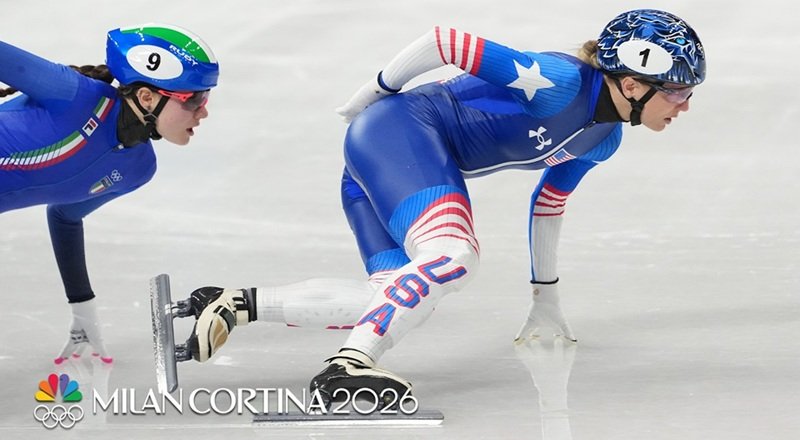
As the Milano Cortina 2026 Winter Olympics reach their final stretch, a clear throughline has emerged: women athletes are setting the tone for the Games. With more than 2,800 competitors across 16 disciplines, Italy’s dual-host event has delivered global milestones — but the most resonant moments are arriving from women who are competing with commanding poise, emotional openness, and a level of visibility that reflects the shifting landscape of modern athletics.
At the center of this spotlight is Team USA’s women’s hockey squad, now advancing to the gold medal game following a dominant semifinal performance. Simultaneously, figure skating — a sport long shaped by its emotional and artistic intensity — delivered one of the most memorable scenes of the Olympics through Amber Glenn’s powerful reaction in the kiss-and-cry area after her short program. Together, these developments illustrate a pivotal moment in women’s sports: performance and vulnerability are receiving equal recognition, and athletic achievement is being framed within broader conversations about representation, wellness, and the future of women-centered leagues.
Team USA Women’s Hockey Delivers a Historic Olympic Run
On February 16, Team USA defeated Sweden 5–0 in a commanding semifinal victory that continued an extraordinary run of dominance throughout the tournament. With contributions from Cayla Barnes, Taylor Heise, Abbey Murphy, Kendall Coyne Schofield, and Hayley Scamurra — and a fifth consecutive shutout from goaltender Aerin Frankel — the U.S. reached the gold medal stage with a cumulative scoring margin of 31–1.
Their performance sets up a highly anticipated matchup against Canada on February 19, marking the seventh Olympic gold medal meeting between the longtime rivals. Canada currently leads the historical tally 4–2, but the U.S. team’s undefeated progression and balanced scoring depth add new intrigue to one of the most storied matchups in Olympic competition.
The momentum surrounding the team extends beyond the rink. During a February 17 appearance on TODAY, Billie Jean King and U.S. captain Kendall Coyne Schofield discussed the growth of women’s hockey, the evolution of the Professional Women’s Hockey League (PWHL), and the realities of balancing elite sport with motherhood. Coyne Schofield, a mother of two, spoke candidly about navigating training and parenting at the highest level — a dynamic increasingly visible among athletes across disciplines.
Their conversation also highlighted The Rise, a new docuseries chronicling the development of women’s sports and the PWHL’s inaugural season. The show’s premiere on February 16 further amplified the conversation around visibility and long-term investment in women’s leagues. Against this cultural backdrop, Team USA’s on-ice accomplishments resonate as part of a broader narrative about opportunity, access, and the infrastructure sustaining elite women’s competition.
Amber Glenn’s Emotional Short Program Captures Global Attention
While hockey has supplied the Games’ most dominant performances, figure skating provided one of its most affecting scenes. On February 17, U.S. skater Amber Glenn completed her short program to Madonna’s “Like a Prayer,” delivering a technically ambitious routine that included a successful triple axel — one of the most challenging jumps attempted in the women’s field.
However, an under-rotation on her double toe loop disrupted her final combination, costing essential points and leaving her with a score of 67.39 and a 13th-place standing. The moment that followed — Glenn breaking down in the kiss-and-cry area as she told coach Damon Allen, “I had it” — was replayed across global broadcasts.
Commentators, including Tara Lipinski, contextualized the moment as emblematic of both the artistic intensity of figure skating and the mental demands placed on athletes performing under Olympic scrutiny. Glenn’s transparency echoed modern conversations in sports around emotional wellness and the visibility of imperfect moments on the world stage.
Her performance still advanced her to the free skate on February 19, sustaining hopes for a strong overall finish. But its impact stretched beyond scoring; it underscored how emotional presence has become part of the Olympic narrative, particularly for women whose identities as athletes are increasingly portrayed through both their physical skill and personal resilience.
Women’s Sports Take Center Stage at a Historic Winter Olympics
Milano Cortina 2026 represents a landmark moment for winter athletics — not only as the first Winter Games co-hosted by two cities, but as a globally visible platform reshaping the perception of women in sport. With 1,338 women competing — nearly half the athlete field — these Games feature the most balanced gender representation in Winter Olympic history.
The visibility of athletes like Team USA’s hockey leaders and Amber Glenn has coincided with heightened attention to women’s leagues, athlete wellness, and the modern realities of high-performance careers. Billie Jean King’s ongoing advocacy, the rise of the PWHL, and increased behind-the-scenes storytelling through projects like The Rise reflect a coordinated momentum across institutions, media, and athletes themselves.
The Olympics have long been a venue for cultural shifts, and 2026 continues that pattern. Women’s stories — whether triumphant, vulnerable, or grounded in structural progress — have shaped the defining arcs of the Games so far.
What This Moment Suggests About the Future of Women’s Empowerment in Sports
Taken together, USA Hockey’s dominance, Glenn’s emotional transparency, and the broader ecosystem supporting women’s sports point toward an evolving framework for empowerment. Today’s narratives highlight:
- Visibility and Reach: Women athletes are receiving coverage proportionate to their achievements, placing their stories at the forefront of global broadcasts.
- Structural Support: Organizations and leagues are building long-term pathways for professional advancement, from the PWHL to expanded Olympic programming.
- Real-World Representation: Athletes navigating motherhood, mental health, and long-term career development are reshaping perceptions of what elite performance looks like.
- Cultural Investment: Documentaries, advocacy work, and fan engagement are generating sustainable momentum beyond single events or seasons.
The result is a moment defined not only by athletic success, but by a shifting narrative landscape — one in which women’s sports are treated with depth, seriousness, and the expectation of longevity.