

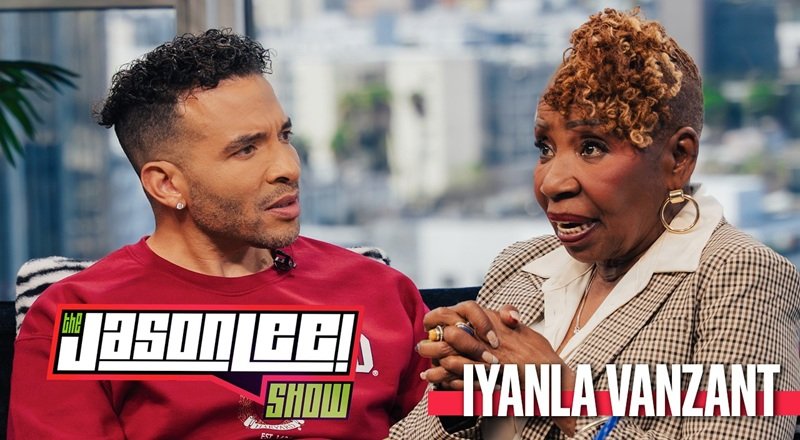
From Oprah to “Carefronting:” Iyanla Vanzant Reminds Us That Healing Is an Inside Job
Some interviews you watch, and some interviews watch you. Iyanla Vanzant’s sit-down on The Jason Lee Show is the second kind.
Over 90 minutes, the spiritual teacher, author, lawyer and TV icon covered grief, betrayal, boundaries, Oprah and the state of the culture. She kept coming back to one simple question: what is the lesson? Jason admitted that on the drive over, he was emotionally “on my way to hell.” He left with homework, and so did we.
Spiritual Hygiene: Your Spirit Deserves a Wash Day Too
Iyanla’s framing is so plain it’s almost funny. You brush your teeth, you wear deodorant and you wash your body. “How come you don’t clean your mind and your heart?”
She breaks spiritual hygiene into four pillars: self-awareness, self-honesty, inner authority and energetic responsibility. The last one is the gem. When you walk into a chaotic room, you ask what you can bring that serves everyone there. Sometimes the answer is just peace.
For a generation that doomscrolls before breakfast, she’s handing out real tools. Earlier this year she challenged audiences to sit in silence for seven minutes, three times a day, for 21 days in a row. One woman wrote to say she had finally finished. She started in February and completed it in October. If that made you feel seen, that’s the point: rest is a practice, not a personality trait.
Meet “Carefronting,” Your New Favorite Boundary
Jason admitted he’s a fighter. He either runs into conflict or cuts people off completely. Iyanla offered a third option she calls carefronting: caring enough about someone to seek the truth and leave things clean, even if you’re walking away.
The script is simple: “I have something I want to share with you, and I think it may be hard for you to hear. I’m asking your permission.” Then you share your experience, meaning what happened and how it made you feel. You aren’t trying to get agreement.
Black women are so often cast as either the “angry” one or the one who swallows everything, so this is freeing. You don’t have to explode, and you don’t have to shrink. You can speak your truth and keep your peace. As Iyanla put it, caring enough to make it clean doesn’t mean you’re doing Thanksgiving together.
Owning Her Part With Oprah
One of the most moving moments came when Jason asked about her famous reconciliation with Oprah. Iyanla’s secret was that she walked in wanting nothing. “I didn’t want her to put me back on TV. I didn’t want anything from her. I wanted to clear the air.”
She owned her role in their falling-out. She explained that her behavior back then came from not believing she deserved to be in those rooms. Jason named it imposter syndrome and said nearly every powerful person he knows carries some version of it.
Her intention was bigger than either of them. She wanted two Black women to show the world what’s possible. Mission accomplished, auntie.
The Body Keeps the Receipts
Iyanla also got vulnerable about her own story. She spent nine years in an abusive marriage, and her jaw was broken while she was six months pregnant. She said she stayed until she got the lesson, and once she got it, she left.
She spoke about motherhood with the same honesty. She said her mistakes as a mother cost her youngest daughter “pieces and parts” of her life. It was raw and accountable, and it was a reminder that the elders we admire are human too.
Her line about trauma deserves a frame on the wall: “The body remembers what the mind forgets.” We shut down to avoid feeling, and that numbness quietly runs our relationships.
On Grief, Forgiveness and Choosing Peace
Jason talked about forgiving his mother the day before she died, and about the end of his relationship with his father. Iyanla told him forgiveness is always for you. She also said ending a relationship is valid when you do it with a clear intention and a boundary.
Translation: protecting your peace isn’t petty. It’s maintenance.
Name Drop: Iyanla on the Culture
In the show’s rapid-fire “Name Drop” game, Iyanla kept it compassionate. For DMX, her word was “brilliant.” She called him gifted and anointed, but said he was never truly presented to something higher than himself.
Cardi B got a joyful “Holla!” and real praise for her vision, her confidence and her political savvy. For Oprah, her word was “Wise.”
On Blueface and Chrisean, she didn’t pile on. She turned the question back on the audience. “Why should they change? Because they’re getting a reward that they want.” If everyone stopped watching, she said, the incentive would disappear. That’s a challenge to every share and stitch that turns a young Black woman’s pain into content.
The Lesson We’re Taking With Us
What makes Iyanla essential isn’t that she has all the answers. It’s that she won’t let us hide from our own. She knows when the truth needs to be soft and when it needs to be cold water in the face.
At a moment that feels like collective spiritual warfare, her message is a lifeline. You don’t have to win every fight. You do have to learn from it, clean up your energy and choose peace on purpose.


Leave a Reply