

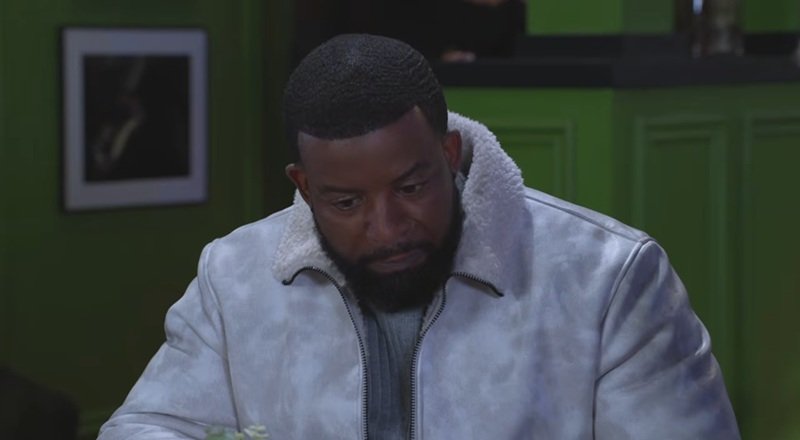
In conversation, the actor reveals a life shaped not by performance, but by survival, discipline, and the kind of growth that does not ask to be seen.
There is a difference between transformation that is visible and transformation that is lived.
The latter rarely announces itself. It does not arrive with language that is polished or easily packaged. Instead, it reveals itself in fragments—through memory, through pauses, through the way a person speaks about what they have endured without needing to reshape it into something softer.
Maurice P. Kerry carries that kind of transformation.
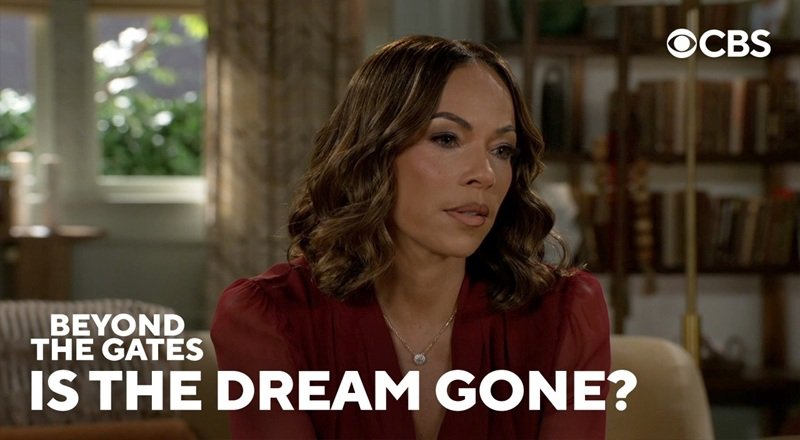
In a recent conversation with Richard Taite, founder of Carrara Treatment, where celebrities go for treatment, on We’re Out of Time, the Beyond the Gates actor speaks with a clarity that feels unfiltered. Not performative vulnerability, but something steadier. Something earned. His story unfolds not as a narrative of arrival, but of continuation—of learning how to live again after experiences that do not simply end when the uniform comes off.
The Weight of Returning Without a Roadmap
Coming home is often described as a return.
For many veterans, it is anything but.
Kerry speaks about that transition without dramatization. After his service, there was no immediate landing—no structure waiting to absorb the impact of everything he had experienced. Instead, there was uncertainty. A kind of disorientation that is difficult to articulate but impossible to ignore.
For nearly a year, he lived out of a borrowed car.
A blue Chevy Malibu became a place of strategy, of survival, of quiet recalibration. It was not framed as defeat. It was described as what it was: a base of operations. A place to think. A place to figure out how to move forward when the next step was not yet clear.
That framing matters.
It resists the instinct to romanticize struggle while also refusing to reduce it to failure. It reflects a mindset shaped by discipline—the ability to remain functional even when stability has not yet returned.
What It Means to Function While Carrying More Than What Is Seen
Healing is rarely linear.
Kerry speaks openly about living with PTSD, describing its impact in ways that feel practical rather than abstract. Short-term memory becomes unreliable. The demands of acting—memorization, timing, presence—require an added layer of effort that remains largely invisible to those watching.
There is no attempt to disguise that reality.
Instead, there is a quiet commitment to responsibility. A refusal to allow personal struggle to compromise the work or the people depending on it. It reflects a particular kind of integrity—one that understands that showing up matters, even when it requires more than what others can see.
This is the kind of discipline that often goes unnamed.
It is not about perfection. It is about consistency in the face of difficulty.
Masculinity Reimagined Through Care and Presence
There is a moment in the conversation where the tone shifts.
When Kerry speaks about his daughter, the language softens. The structure of his voice changes, almost imperceptibly, as though something more personal has entered the room.
For sixteen years, he has raised her on his own.
The framing is simple. Direct. There is no embellishment, no attempt to reshape the experience into something more palatable. Just a clear acknowledgment of time, responsibility, and presence.
“I’m proud of her.”
The statement holds more weight than its simplicity suggests.
For Black women, particularly those who understand the complexities of being raised, protected, or even failed within family structures, that kind of presence carries meaning. It reflects a version of masculinity that is not rooted in dominance or distance, but in care, consistency, and accountability.
It is not loud. It does not need to be.
The Subtle Language of Emotional Safety
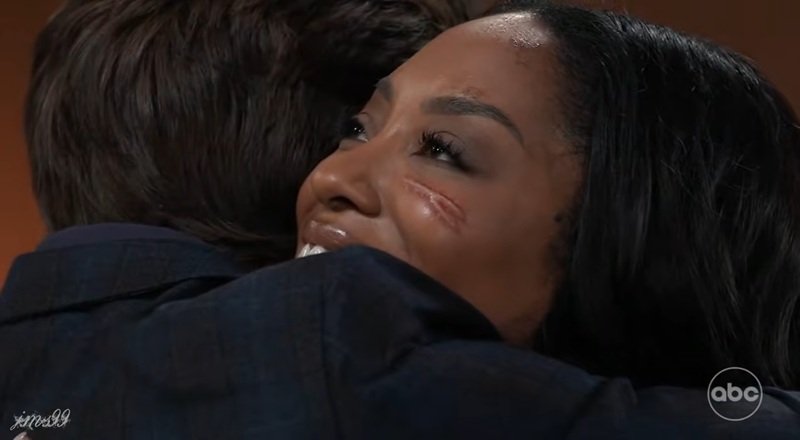
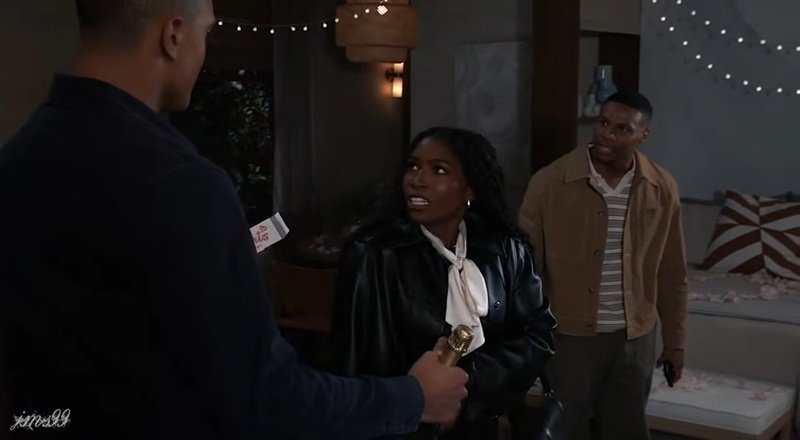
In speaking about his character Randy’s connection with Mona on Beyond the Gates, Kerry describes the relationship not in terms of romance, but as “an oasis.”
The word feels intentional.
An oasis is not permanent. It is not claimed or possessed. It is a place of pause. Of relief. Of safety within an otherwise difficult landscape. That distinction reveals something about how he understands connection—not as something to conquer, but as something to experience carefully.
“She’s safe,” he says.
Safety, when spoken in that way, becomes more than comfort. It becomes recognition. It reflects an awareness of how rare it can be to encounter spaces—and people—who allow for softness without expectation.
For many Black women, that language resonates deeply.
It speaks to a desire not just to be seen, but to be held in a way that does not require constant defense.
A Career Built Through Endurance, Not Illusion
Kerry’s path into acting did not follow a traditional arc.
It emerged through persistence, through navigating rejection, through confronting the subtle and overt limitations placed on Black actors within the industry. His early roles came gradually, shaped by a willingness to remain in the process rather than step away from it.
Even now, his ambitions remain grounded.
There is an interest in physical roles, in movement, in expanding what his body can do within the frame. It reflects a continuation of something that began long before acting—a relationship to discipline, to strength, to endurance.
The work is not separate from who he is.
It is an extension of it.
What It Means to Become Without Needing Recognition
There is no single moment in Kerry’s story that functions as a turning point.
Instead, there is accumulation.
Time spent figuring things out. Time spent surviving. Time spent raising a child. Time spent rebuilding a sense of direction. Each piece contributes to something that cannot be reduced to one defining moment.
And perhaps that is where the clarity lies.
Becoming does not always happen in ways that are visible. It does not always arrive with recognition or validation. Sometimes, it unfolds quietly—through decisions made daily, through responsibilities honored, through a refusal to disappear even when circumstances make that option feel easier.
Kerry’s story reflects that kind of becoming.
It is not polished. It is not simplified. It does not ask to be admired.
It simply exists as it is—layered, steady, and still in motion.






Lisa
Great story, true hero!