

From Silence to “I Claim My Freedom:” What Mothers & Daughters: Torn Apart Teaches Us About Breaking Cycles
Let’s be honest: some of us couldn’t get through the first five minutes of Mothers & Daughters: Torn Apart with Iyanla Vanzant without pausing to text our mamas. Or deliberately not texting our mamas. Both are valid.
In this OWN Spotlight special, Iyanla takes the Fix My Life formula out of the living room and onto a stage. A live audience of mothers and daughters watches three generations of women do the hardest work there is: telling the truth to the women who raised them. It’s raw, it’s messy, and it’s one of the most loving things TV has given us in a while.
A gentle heads up: the special includes discussion of childhood sexual abuse. Protect your peace and watch when you’re ready.
The Mirror Between Us
Iyanla frames the night around one idea. Daughters reflect their mothers, and mothers reflect theirs. She calls it “the mirror between us,” and she speaks from experience. She opens by naming what she couldn’t say as a daughter and couldn’t hear as a mother.
The daughters take the stage first: Tashira, Patricia, and Nikki. Their mothers wait in another room, and the granddaughters are there to see that change is possible. Asked to describe her relationship with her mom, Nikki doesn’t hesitate: “Toxic.” Patricia picks “pleasant,” then admits it really means things go unsaid. Iyanla’s response is a whole sermon: silence is dishonest.
The Strong Friend Was Never Supposed to Raise Herself
Tashira calls herself a fighter. She says her mother was in the streets and she basically raised herself. Iyanla stops her mid-sentence. That’s her mother’s story, she says. Tashira’s own story is simpler and harder to say: she grew up without her parents there.
If you’ve ever been the eldest daughter, the “I’ll figure it out” girl, or the one who took care of everybody, this segment will find you. Tashira describes a 5-year-old who believed she always had to be number one and had to look after her sisters. Iyanla’s point lands hard: a child should never be made responsible for protecting her parent. And yes, even mid-breakthrough, Tashira kept it hardcore Baltimore. Nobody let her live down that tear.
“I Want a Genuine I Love You”
Nikki’s story cuts differently. Her grandmother raised her until she was 13. Then she moved in with her mom, Shirley, and felt like she became the household help overnight. Meanwhile, she watched her younger sister Dawn get treated like the baby girl. When she finally faces Shirley, she says it plainly: “I want a genuine I love you and mean it.”
Shirley insists Nikki knows she’s loved. Iyanla doesn’t let it slide, because Nikki doesn’t feel it. Her advice to every mom watching is worth framing: don’t make up what your daughter means when she tells you how she feels. Just receive it.
What Was Never Spoken
The most devastating moment belongs to Patricia and her mother, Rosalyn. Patricia asks why her mom didn’t believe her about the abuse she suffered as a child. Rosalyn admits they never talked about it. Then, with Patricia literally holding her up, Rosalyn reveals that family members abused her too. She never found words for her own pain, let alone her daughter’s.
Iyanla urges her to stop swallowing it and give it sound. It’s a heavy, sacred moment, and the special treats it that way. Then Patricia’s daughter turns to her grandmother and offers forgiveness, along with a promise: “I got to do it different.”
Three Generations, One Pattern
Dawn thought she was there to support her sister. Turns out she was there to see herself. Her eldest daughter, Jordan, hasn’t spoken to her younger sister Cameron in over a year. The fight was over a calculator, which Jordan herself admits is petty. Jordan recalls the day her mother grabbed her and squeezed a water bottle in her face in public. Dawn has to sit with being experienced as an aggressor.
The pattern is right there on stage: Shirley and Nikki, Dawn and Jordan, Jordan and Cameron. Iyanla’s line becomes the thesis of the night: “What you don’t heal in you, you pass on to your daughters.”
“It Ends With Me”
The finale is an exercise Iyanla calls “clearing the line.” Shirley places her hands on her daughters’ shoulders, and the women repeat after Iyanla: “I honor what I received and I release what isn’t mine. It ends with me. I claim my freedom.”
Let’s sit with why that matters. Black women are so often taught that silence is strength and survival is love. Our mothers and grandmothers did what they had to with what they were given. The special never asks anyone to drag her mama. When one mother calls her daughter’s pain her fault, Iyanla corrects her: it’s not fault, it’s responsibility. That distinction is everything.
The Takeaway
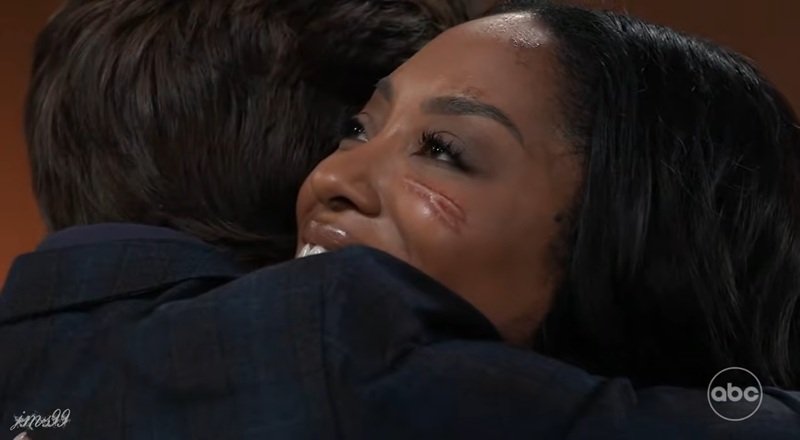
By the end, the women share what they’ve learned. One daughter realizes she is not responsible for her mother’s feelings. Rosalyn says her voice matters. Not every hug came easy. Iyanla called this “a hard group,” and honestly, same. But as she reminds us, healing doesn’t happen in the dark. It happens in the light, out loud.
Nobody did it wrong. We just get to choose to do it different.


Leave a Reply