

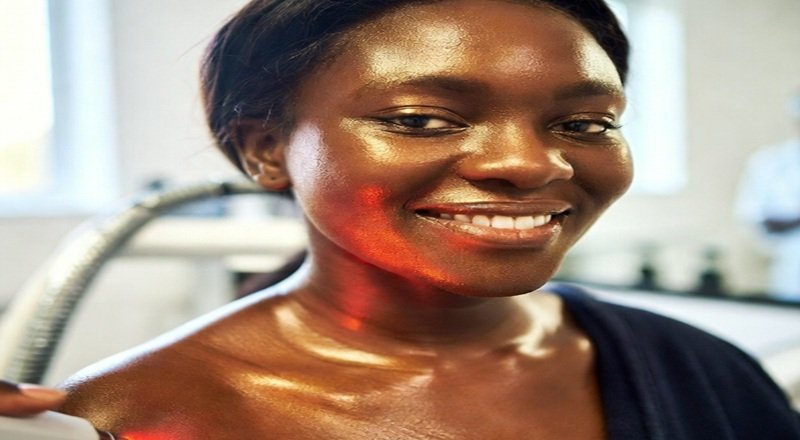
A Thread That Cut Through Noise — And Named Real Concerns
In an increasingly curated digital landscape, the most meaningful beauty conversations often happen in unexpected corners of the internet. That was the case when a dark-skinned woman posted on Reddit about an issue many Black women know intimately but rarely discuss publicly: stubborn regrowth in the Brazilian area, new dark spots after waxing, and a concern that hormonal shifts from a new IUD might be worsening the problem. She wondered whether laser hair removal — long rumored to be unsafe or ineffective for dark skin — was actually a viable option.
The question resonated instantly. What followed was a thoughtful exchange among Black women of varying skin tones and hair textures, each offering personal experiences grounded in vulnerability and practical knowledge. The thread became more than a troubleshooting guide; it evolved into a nuanced conversation shaped by shared history, body-specific realities, and the ongoing evolution of beauty technology for melanin-rich skin.
Early Misconceptions Meet Lived Experience
For decades, laser hair removal carried a persistent myth: that it simply wasn’t designed for Black skin. Older devices struggled to differentiate between melanin in the skin and melanin in the hair follicle, creating a real risk of burns, hyperpigmentation, and scarring. Those concerns lingered, forming cautionary folklore passed between friends, mothers, and aunties.
But the Reddit responses made something else clear: technology has shifted, and so have outcomes.
Women described long-term relief from ingrown hairs, smoother skin, and a dramatic decrease in irritation — particularly in the bikini and Brazilian area, where curly, coarse hair is more likely to inflame the skin and create dark spots. One commenter noted that after ten sessions, she no longer battled ingrowns and only shaved “once every two weeks” because her regrowth had become so fine. Another, with skin tone comparable to Gabrielle Union’s, shared that while she still shaved occasionally, the overall density and coarseness diminished significantly.
Across dozens of stories, the pattern repeated: women weren’t seeking perfection; they were seeking relief. And for many, modern laser treatments provided precisely that.
Pain, Procedure, and the Realistic Path to Results
In a world of influencer gloss, the Reddit thread offered something more transparent. The women who responded didn’t downplay the discomfort. Most described the sensation as sharp and elastic, like “rubber band pops,” with the labia and inner bikini line being the most sensitive regions. But nearly all contextualized the pain as momentary — and worth the trade-off compared with waxing, ongoing razor bumps, or constant ingrowns.
They also emphasized that laser hair removal is a process, not a one-time solution. For dense, curly hair, especially in the Brazilian area, eight to twelve sessions were common. Maintenance appointments every six to twelve months kept results stable. Nothing in the conversation promised a miracle; the thread instead offered grounded expectations rooted in real outcomes.
When Hormones Enter the Chat
One of the most revealing threads within the discussion centered on hormones, particularly hormonal IUDs. Several women shared that their levonorgestrel IUDs increased androgen levels, leading to faster, denser regrowth — sometimes reversing portions of their laser results. For one commenter, her OBGYN confirmed the connection after years of uncertainty.
This nuance — often missing from mainstream beauty discussions — reframed the conversation around laser’s limits. The women were remarkably aligned: laser hair removal can reduce growth, but hormones can override even the best results. For anyone experiencing sudden changes, the thread encouraged a medical conversation alongside cosmetic decisions.
What emerged was a grounded truth:
Laser hair removal is effective, but the body’s hormonal ecosystem still sets the rules.
Technology Has Finally Caught Up to Melanin-Rich Skin
The science behind modern devices made several appearances in the conversation, underscoring a shift that has made laser more accessible for deeper skin tones. The Nd:YAG laser — long considered the safest and most effective option for Fitzpatrick IV–VI — bypasses surface melanin to target the follicle directly. This minimizes the risk of burns or pigment changes and has become the gold standard for Black skin.
Advanced diode lasers that blend 810–1064 nm wavelengths have also emerged as strong options for dark skin when used by trained providers. Studies referenced across the broader medical landscape indicate high satisfaction rates and notable reduction without long-term side effects.
What women are still advised to avoid — and what the Reddit thread reinforced — are older devices such as Alexandrite lasers or IPL, both of which carry a greater risk of adverse reactions on dark skin.
The collective insight underscored a broader truth:
The barrier is no longer technology. The barrier is access to providers who understand how to use it.
Dark Spots, Discoloration, and the Emotional Weight of Skin History
Many women in the thread expressed concern about hyperpigmentation — a recurring issue for Black women whose skin is more prone to dark marks from irritation, inflammation, or friction. Waxing and shaving often aggravate these areas, especially along the bikini line.
Laser hair removal, while not a treatment for discoloration itself, helped several women reduce the triggers that led to dark spots in the first place. By easing ingrowns and minimizing breakouts, some observed that their skin tone gradually became more even. Others paired laser with gentle exfoliation or lactic acid-based products to improve texture over time.
These testimonies highlighted something deeper: for many Black women, hair removal is not only about aesthetics — it’s about managing skin conditions shaped by texture, melanin, and generational patterns of irritation.
Where Expertise Meets Community Wisdom
As discussions unfolded, the thread organically connected personal experience with skin science. Women encouraged each other to vet medspas thoroughly, ask for Nd:YAG devices by name, view sample photos of Black clients, and request patch tests. The conversation also emphasized sun avoidance, pre-session shaving, and post-session cooling and moisturization — practical steps echoed by dermatology guidelines.
But the most meaningful influence of the thread was its tone. It created a community-defined space where Black women could compare notes without shame, demystify a technology not originally built for them, and learn from experiences shaped by their specific needs.
Laser hair removal became a symbol of something broader: navigating modern beauty through a lens informed by identity, history, and cultural specificity.
Why the Thread Matters Beyond Hair Removal
The popularity of the Reddit discussion speaks to a larger shift in beauty culture. Black women are leading conversations about their own bodies, claiming authority over their experiences, and creating shared knowledge networks where honesty is valued over perfection. In this case, a single post evolved into a collective mapping of what works, what doesn’t, and what to ask before beginning a treatment plan.
The thread didn’t offer one universal answer. Instead, it revealed the layered reality behind a common question:
laser hair removal is safe and effective for dark skin when approached with the right technology, expectations, and hormonal awareness — and it can dramatically reduce discomfort, irritation, and hyperpigmentation concerns that many Black women have long carried.
In a marketplace where beauty information is increasingly commercialized, these authentic exchanges feel rare. And yet, they are often the most transformative.













Leave a Reply