

From combat veteran to Beyond the Gates actor, Maurice P. Kerry steps into a new spotlight—one rooted in purpose, legacy, and representation.
Maurice P. Kerry’s career does not follow a linear arc—it moves with intention, shaped by discipline, disruption, and a refusal to remain defined by any single chapter. His upcoming role as co-host of the 2nd Annual Military & Veteran Entertainment Awards Gala reflects that evolution with quiet precision.
Scheduled for May 23, 2026, at the Skirball Cultural Center in Los Angeles, the event gathers a cross-section of military figures, creatives, and cultural contributors. Kerry will share hosting duties with Davina Wong, a U.S. Air Force veteran and actor, bringing to the stage a dynamic shaped as much by lived experience as professional presence.
A Career Built Between Worlds
Kerry’s story resists simplification. A decorated U.S. Marine Corps combat veteran who served during Operation Iraqi Freedom II, his early years were defined by structure, service, and the kind of resilience that cannot be performed—it is earned.
After his time in the military, he navigated a series of transitions that included work as an EMT, firefighter, and security contractor in Kuwait. The return to civilian life, however, brought its own set of challenges. He has spoken openly about enduring homelessness in Southern California for over a year, alongside the weight of post-traumatic stress.
That period did not stall his trajectory—it reshaped it.
Acting became less about visibility and more about translation: a way to process, articulate, and ultimately reclaim narrative control.
Presence, On Screen and Beyond
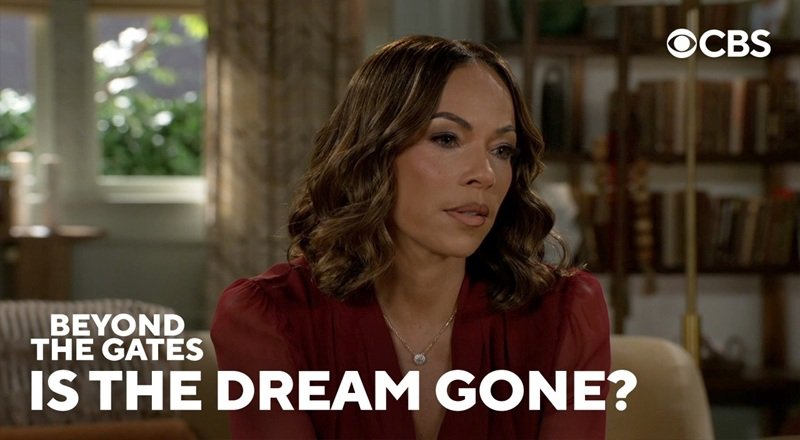
Kerry’s work in television and film reflects a deliberate range. His recurring role as Randy Parker on CBS’s Beyond the Gates places him within a series already redefining the visual and emotional tone of daytime storytelling. Appearances in projects such as Law & Order: Organized Crime, The First Lady, Atlanta, and Class of ’09 extend that presence across genres, platforms, and audiences.
There is a noticeable throughline in his performances—a grounded intensity that reads as lived rather than learned.
Beyond acting, his work as a producer, director, and military advisor underscores a commitment to accuracy and authenticity. Representation, in his case, is not aesthetic—it is structural.
The Weight and Intention of the Stage
The MV Awards Gala itself occupies a specific cultural space. Organized by the National Entertainment Awards Academy for Military & Veterans, the event exists to recognize storytelling that reflects the realities, complexities, and contributions of veterans across media.
It is both celebration and correction.
For decades, narratives surrounding military service have leaned toward narrow archetypes—often flattened into heroism or trauma, rarely allowed the breadth of full humanity. The MV Awards seek to expand that frame, supporting projects that present more nuanced perspectives.
Kerry’s involvement aligns naturally with that mission.
NEAAMV Chairman Joe Ramirez described him as bringing “professionalism, presence, and heart to the stage,” a sentiment that speaks less to performance and more to alignment. Kerry is not an external host stepping into unfamiliar terrain—he is part of the ecosystem the event is designed to honor.
Returning, With Expanded Purpose
This will not be Kerry’s first appearance at the MV Awards. His participation in the inaugural 2025 gala established an early connection to the platform, one that now deepens with this year’s hosting role.
That progression feels intentional.
Growth, in this context, is not marked by distance from past experiences but by a closer integration of them. His journey—from military service to homelessness to a multifaceted career in entertainment—does not sit in the background. It informs the way he occupies every room, including this one.
A Broader Cultural Conversation
Set against the backdrop of Los Angeles, the 2026 gala will include a range of notable figures, from actor Dennis Quaid—this year’s Patriot Ally Award honoree—to presenters, veterans, and industry leaders contributing to a growing conversation around representation.
Performances, red carpet arrivals, and expanded award categories will frame the evening, but the underlying purpose remains clear: to create space for stories that have historically been overlooked or simplified.
Kerry’s role as co-host places him at the center of that exchange—not as a figurehead, but as a participant in an ongoing cultural recalibration.
Legacy, Reconsidered
The language often used around legacy suggests something static—an endpoint, a summary.
Kerry’s trajectory offers a different interpretation.
Legacy, in his case, reads as movement. As continuation. As the decision to keep building, even when the foundation has been tested repeatedly.
His presence at the MV Awards Gala does not signal arrival as much as it reflects alignment with a broader purpose—one that connects service, storytelling, and the responsibility of being seen fully.
In that sense, the moment extends beyond the stage.
It becomes part of a larger narrative—one still being written, with intention.

Leave a Reply