

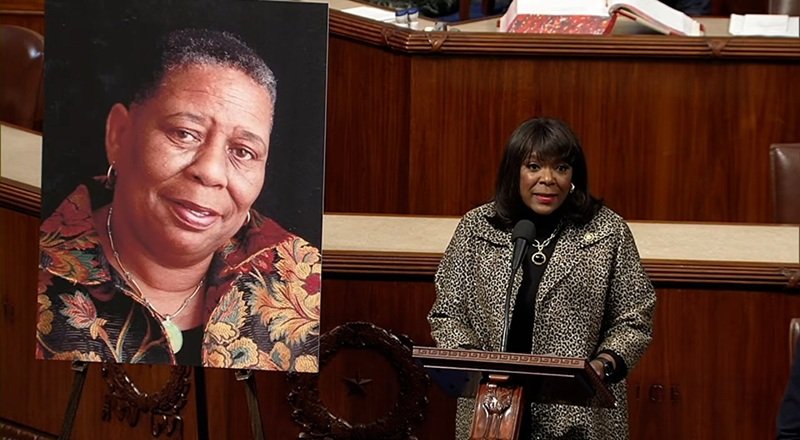
A Moment of National Recognition for a Selma Daughter
When Congresswoman Terri A. Sewell stood during morning-hour debate on February 24, 2026, the chamber was moving through the procedural rhythm that marks the start of each legislative day. Yet her five-minute remarks broke from routine, offering a memorial that reached far beyond the walls of the U.S. Capitol. Sewell spoke to honor JoAnne Bland, the Selma-born civil rights foot soldier whose February 19 passing marked the end of a life intertwined with one of America’s most defining movements.
Her tribute, recorded in the Congressional Record, captured the weight of Bland’s story. It’s one forged not in adulthood but in childhood. Sewell, Alabama’s first Black congresswoman and herself a daughter of Selma, framed Bland as both witness and architect of the struggle for voting rights. It was a recognition rooted in lineage: the generation that marched cleared the path for the generation that governs.
Growing Up in the Heart of the Movement
Jo Anne Blackmon Bland was born on July 29, 1953, into a city that would become synonymous with the fight for voting rights. After losing her mother early in life, she was raised primarily by her grandmother, Sylvia Johnson, in the George Washington Carver Homes—a place that served not only as shelter, but as an organizing hub for the Dallas County Voters League.
By the time many children were learning to ride bikes, Bland was attending strategy meetings alongside local leaders like Amelia Boynton. She absorbed the principles of nonviolent protest as though they were part of the everyday language of growing up. At just eight years old, she began joining sit-ins and demonstrations. By 11, she had already been arrested more than 13 times—each one a confrontation with the machinery of segregation that sought to silence the young as firmly as the old.
Those early arrests were not symbolic acts; they were lived experiences that placed Bland squarely within the lineage of a movement relying on ordinary, everyday courage.
Bloody Sunday and the Making of a Foot Soldier
On March 7, 1965, Bland walked onto the Edmund Pettus Bridge with over 600 peaceful demonstrators during what would come to be known as Bloody Sunday. She marched alongside neighbors, community leaders, and two figures who would become icons of American civic life: John Lewis and Hosea Williams. The brutality that followed—state troopers wielding whips, clubs, tear gas, and horses—became a national flashpoint.
Bland fainted in the chaos. When she awoke, her head rested in her older sister Linda Lowery’s lap as Lowery bled from a wound that would require 26 stitches. These memories would fuel Bland’s lifelong dedication to ensuring the world understood the cost of the struggle for justice.
Weeks later, she joined the triumphant march from Selma to Montgomery on March 25, walking with Dr. Martin Luther King Jr. and thousands of others who helped catalyze the passage of the Voting Rights Act of 1965. Bland had not yet reached adolescence, yet her presence helped shape the very laws that define American citizenship.
A Life Devoted to Truth, Education, and Memory
As a young woman, Bland became part of the first group of seven students to integrate A.G. Parrish High School in Selma. She later attended the College of Staten Island, served in the United States Army, and eventually returned to her hometown in 1989 with a renewed purpose. Preserving the movement she had helped sustain.
In 1991, she co-founded the National Voting Rights Museum and Institute, serving as its director until 2007. Through oral histories, archival work, and community engagement, Bland helped ensure that Selma’s story would be preserved accurately and expansively—not as a footnote, but as a foundational chapter of American democracy.
She later founded Journeys for the Soul, an educational tour company dedicated to guiding visitors through Selma’s historical landscape. For more than 30 years, she offered firsthand accounts that imbued the city’s landmarks with lived context. Bland did not narrate history from a distance; she reanimated its texture, its urgency, and its humanity.
Building Foot Soldiers Park for a New Generation
In 2021, Bland and Kimberly Smitherman began acquiring land near the staging site of the Bloody Sunday march to create Foot Soldiers Park and Education Center. Their vision was expansive—a tribute to the “ordinary people” whose efforts were often overshadowed by more widely recognized figures.
Bland frequently used a jigsaw-puzzle metaphor to describe the movement: every person a vital piece, every piece essential to the final picture. Foot Soldiers Park reflected that belief. It was built not only to honor the past, but to teach the next generation that democracy is shaped and defended by everyday individuals, not just icons.
Her commitment to truth-telling extended into her work with institutions such as the NAACP, the Southern Christian Leadership Conference, and the Equal Justice Initiative. She remained a steadfast mentor, speaker, and guide, reminding audiences that history lives in memory—and memory must be preserved with integrity.
A Tribute Rooted in Lineage and Gratitude
Rep. Terri Sewell’s House floor tribute honored both the public and deeply personal dimensions of Bland’s life. As a Selma native, Sewell spoke as a representative, a witness, and a beneficiary of Bland’s sacrifices. She recalled hosting Bland as her guest at President Biden’s 2024 State of the Union Address, describing it as a profound honor. Her tribute also underscored how Bland’s generation of young marchers paved the way for Black political leadership—including her own.
Sewell concluded her remarks by asking her colleagues to join her in honoring Bland’s life and legacy, ending with a sentiment that echoed widely across tributes that day: “May she rest in power and in peace.”
A Passing Marked by Reflection and Return
Public viewing was held on February 27 at Aubrey Larkin’s Lewis Brothers Funeral Home. A celebration of life on March 4 at the Carl Morgan Convention Center was followed by a ceremonial crossing of the Edmund Pettus Bridge—an intimate, symbolic return to the ground that defined Bland’s childhood activism.
Through her son, grandchildren, siblings, and countless community members who claimed her as family, Bland leaves behind a legacy of generosity, conviction, and unwavering dedication to truth.
And through Rep. Sewell’s congressional tribute, that legacy now lives in the nation’s historical record—a reminder that America’s progress rests on the courage of those who dared, even as children, to demand the dignity they had been denied.








Leave a Reply