
What it means to build, lose, risk everything—and still choose yourself anyway.
There’s a version of Monique Rodriguez’s story that reads like a headline: basement to billion-dollar brand, acquisition by Procter & Gamble, still CEO.
It’s clean. It’s aspirational. It’s the kind of narrative that gets flattened into motivation.
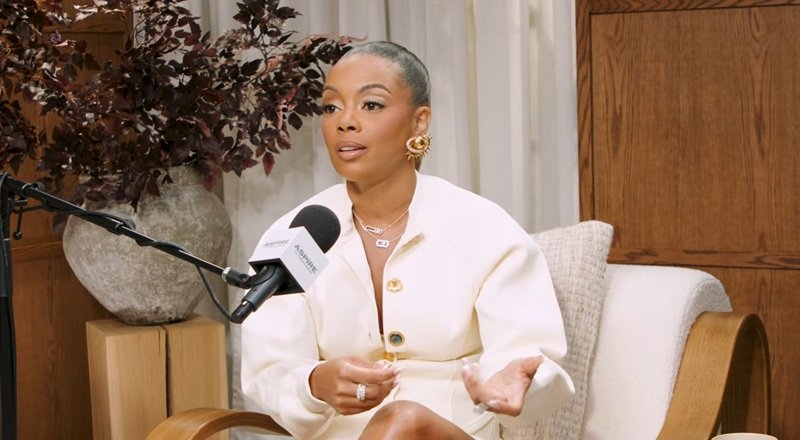
But the real story—the one she tells in her recent Aspire interview—is something far more intimate. It’s about grief. About pressure. About making decisions without a blueprint and living with the consequences anyway.
And for Black women, especially, it lands differently.
Because what Rodriguez built wasn’t just a company. It was a life she chose for herself after realizing she could no longer live one designed by survival.
The Moment Everything Changed Was Not a Business Decision
Before Mielle Organics, before retail deals and boardrooms, Monique Rodriguez was a nurse. Her life was structured around stability, security, and doing what she had been taught would protect her future.
Then everything shifted.
After the tragic loss of her son in 2013, she describes a transformation that had nothing to do with ambition and everything to do with clarity. The kind that doesn’t arrive gently.
It forced a question many women avoid asking out loud: Whose life am I living?
Rodriguez didn’t frame it as reinvention. She framed it as refusal.
She no longer wanted to live life based on someone else’s terms. Not her upbringing. Not expectations. Not fear.
And that distinction matters.
Because what followed wasn’t confidence. It was courage in its rawest form—the willingness to act while still afraid.
Building Without a Blueprint—and Without Permission
There’s something deeply familiar about how Mielle began.
Not in a boardroom. Not with capital. But in experimentation.
Rodriguez started by trying to fix her own hair. Mixing ingredients. Testing ideas. Failing publicly, sometimes literally—like the moment egg cooked into her hair in a hot shower.
It wasn’t polished. It wasn’t strategic. It was instinctive.
And that’s where so many Black women recognize themselves—not in the billion-dollar outcome, but in the beginning. In the figuring it out. In the lack of access to formal pathways.
She didn’t have a roadmap. She didn’t even have clarity that she was building a brand.
She had a problem. And the willingness to stay with it long enough to find a solution.
When she eventually found a chemist through Google, negotiated small production runs, and paid in installments timed to her paychecks, it wasn’t innovation in the traditional sense.
It was resourcefulness.
And that difference is everything.
The Risk Was Never Just Financial
There’s a quiet honesty in how Rodriguez talks about money.
Not as a symbol of success, but as a constant pressure point.
She and her husband poured everything into the business—paychecks, savings, retirement funds. They went from two stable incomes to one. Then eventually to none.
They charged credit cards. They sacrificed time, sleep, and presence with their children.
And at one point, they put their home on the line.
It’s easy to romanticize risk when the outcome is success. But Rodriguez names it for what it was: uncertainty layered with responsibility.
Children depending on you. Family questioning your choices. The weight of proving that you didn’t make a mistake.
That kind of risk isn’t glamorous.
It’s deeply personal.
What Growth Really Looks Like From the Inside
By the time Mielle entered retail, the outside story had already begun to look like success.
Products selling out. Demand increasing. Retail partnerships forming.
But internally, things were far more fragile.
Rodriguez describes a period where the company was growing fast—but not sustainably. Mismanaged finances, misunderstood spending, and a lack of experienced guidance led to a situation where they were millions in debt.
At one point, the bank was threatening to take their home.
And this is where her story shifts again.
Because the lesson wasn’t just about business mechanics. It was about proximity to power.
Understanding your numbers. Asking the right questions. Knowing when to bring in expertise—not as a luxury, but as a necessity.
For women who are often taught to “figure it out” alone, that lesson is particularly sharp.
You don’t have to carry everything by yourself to prove you’re capable.
The Power of Alignment Over Desperation
When Rodriguez began seeking investors, she was doing so from a place many founders know too well: urgency.
The first offer she received would have required giving up a significant portion of her company for far less than what it was worth.
She considered it.
Not because it was right—but because she needed it.
What changed everything wasn’t strategy. It was instinct.
Something didn’t sit right, even in desperation.
And when that deal fell through, it created space for something better. A partnership that not only brought capital but also understanding—someone who had lived through the same journey.
That distinction—between money that saves you and money that sustains you—is one of the most overlooked aspects of entrepreneurship.
And one of the most critical.
Success Doesn’t Silence Criticism—It Amplifies It
The acquisition by Procter & Gamble marked a new chapter for Mielle.
It was, by every measurable standard, a success.
But Rodriguez anticipated something many people don’t talk about: backlash.
Criticism came quickly and intensely, particularly from the very community that had supported the brand.
Questions about ownership. About integrity. About whether something had been lost in the process.
Rodriguez’s response wasn’t defensive—it was grounded.
She stayed anchored in her vision. In her intentions. In the belief that scaling a brand to reach more people wasn’t abandonment, but expansion.
Still, the experience reveals something deeper about visibility for Black women.
Success doesn’t shield you from scrutiny. It often invites more of it.
And navigating that requires a different kind of resilience—one rooted not in approval, but in self-trust.
What It Means to Lead After “Making It”
Three years after the acquisition, Rodriguez remains CEO.
But her perspective on leadership has evolved.
It’s no longer about proving capability. It’s about clarity. Consistency. The ability to make decisions even when outcomes are uncertain.
She speaks about empowering her team, accepting change, and understanding that people will come and go.
There’s a quiet maturity in how she approaches it now.
Less about control. More about stewardship.
And perhaps most importantly, less about validation.
She no longer feels the need to prove anything.
The Legacy Isn’t the Billion—It’s the Shift
If there’s one thread that runs through Rodriguez’s story, it’s this:
She didn’t wait to feel ready.
She acted while uncertain. While grieving. While learning in real time.
And that’s what makes her story resonate beyond business.
For Black women, especially, readiness is often treated as a prerequisite. As something to earn before taking up space.
Rodriguez disrupts that idea completely.
Her story suggests something else:
That willingness—not readiness—is the real starting point.
That vision can exist before validation.
And that sometimes, the most powerful decision is simply choosing not to stay where you were told you belonged.
Why This Story Stays With You
It would be easy to reduce this to a success story.
But that would miss the point.
What Monique Rodriguez offers isn’t a formula. It’s a reframing.
Of fear. Of risk. Of what it means to build something meaningful without certainty.
And maybe most importantly, of what it looks like to honor your own life—even when no one around you fully understands the decision.
Because in the end, the billion-dollar brand is only part of the story.
The real achievement is that she built it without abandoning herself along the way.





Leave a Reply