

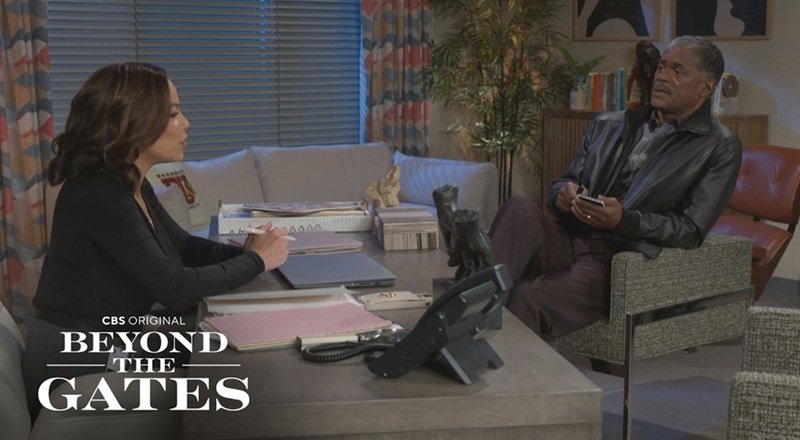
With a historic renewal and a cultural footprint that extends beyond television, Beyond the Gates is redefining what legacy, luxury, and storytelling look like on daytime screens.
Some moments in television that feel less like programming decisions and more like cultural affirmations. The two-season renewal of Beyond the Gates—now secured through 2028—is one of them.
What began as a bold experiment in February 2025 has quickly evolved into something far more enduring: a reimagining of daytime drama that refuses to flatten or simplify the lives it portrays. Instead, it luxuriates in them. Wealth, power, lineage, contradiction—all rendered with intention.
And now, with Seasons 3 and 4 officially on the horizon, the message from CBS is unmistakable: this story matters.
A Storyline That Refuses to Shrink
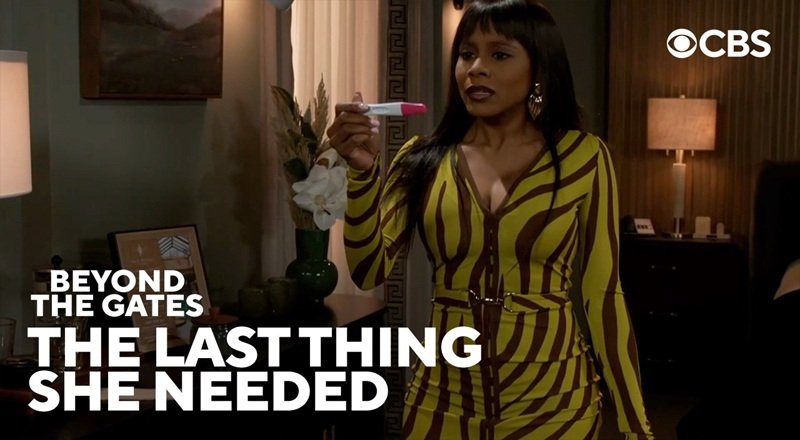
From its inception, Beyond the Gates positioned itself differently. Set within the opulent, tightly controlled world of Fairmont Crest, the series centers the Dupree family—not as a monolith, but as a layered, complicated dynasty.
They are referred to, both within the show and by its audience, as a kind of modern Black royalty. Not because they are flawless, but because they are expansive. They occupy space—financially, emotionally, socially—in ways daytime television has rarely allowed.
And crucially, they are not confined to respectability.
They are messy. Strategic. Vulnerable. Sometimes contradictory. Always compelling.
This is where the show quietly disrupts expectation. It offers a vision of life that includes elegance and excess, intimacy and betrayal, ambition and consequence—all without apology.
The Significance of Being Seen Fully
The importance of Beyond the Gates is not just in its existence, but in its scale.
As the first new daytime soap on a major broadcast network since Passions in 1999—and the first with a predominantly African-American cast since Generations—its arrival marked a shift long overdue.
But representation alone does not sustain a series. Execution does.
Created by Michele Val Jean and produced in partnership with CBS Studios, the NAACP, and Procter & Gamble, the show has managed to do something deceptively difficult: it balances cultural specificity with universal intrigue.
Viewers are not asked to translate or dilute what they see. They are simply invited into a world that has always existed—one now given the cinematic framing it deserves.
Ratings, Reception, and the Business of Belief
The numbers, of course, tell part of the story.
Upon its debut, Beyond the Gates drew 2.28 million viewers in L+3 ratings, marking a 78% increase from its predecessor in the time slot. It also delivered a 48% boost in broadcast viewership and a 67% rise across platforms—metrics that quickly positioned it as a competitive force against long-standing staples like General Hospital.
But beyond the metrics lies something more telling: consistency.
The show didn’t spike and disappear. It held, built. It became part of the rhythm of daytime viewing.
CBS Entertainment President Amy Reisenbach noted as much, emphasizing that the series “immediately improved the time period” while earning both audience enthusiasm and critical acclaim.
In an industry often driven by caution, this kind of sustained investment signals belief—not just in a show, but in what it represents.
Atlanta as a Creative Anchor
Equally significant is where the story is made.
Filmed at Assembly Studios in Atlanta, Beyond the Gates employs a production team of over 200 people, embedding itself within a growing ecosystem of Black creative and technical talent.
Atlanta, long recognized as a cultural hub, becomes here a site of narrative authority. The city is not just a backdrop—it is infrastructure. It holds the labor, the artistry, and the vision required to sustain a show of this scale.
In that sense, the renewal is not only about storylines continuing—it is about livelihoods secured, careers expanded, and creative networks strengthened.
The Quiet Power of Longevity
A two-season renewal may read as standard industry practice. But in context, it carries deeper meaning.
It allows for long-form storytelling. For arcs that unfold slowly, deliberately. For characters to evolve without the pressure of premature closure.
It gives writers room to build, to layer, to complicate.
And perhaps most importantly, it affirms that stories centered on wealth, intimacy, and power within Black communities are not niche—they are essential.
There is something quietly radical about that.
Community, Celebration, and Collective Ownership
The response from cast, crew, and audiences reflects a shared sense of investment.
Actor Sean Freeman’s celebratory message—“It’s official!!! … God, we thank you.”—captures both gratitude and recognition. This is not just a job secured; it is a moment acknowledged.
Across social platforms, fans have echoed that sentiment, framing the renewal as a milestone. Not because it was unexpected, but because it was earned.
There is a collective understanding that shows like Beyond the Gates do more than entertain. They expand the visual vocabulary of what is possible.
Looking Ahead—Without Rushing the Moment
Details about Seasons 3 and 4 remain intentionally scarce. No major plotlines have been revealed, no dramatic shifts announced.
And that restraint feels appropriate.
Because the true success of Beyond the Gates lies not in any single twist, but in its ability to sustain attention. To keep audiences returning—not just for spectacle, but for familiarity, for nuance, for the slow unfolding of lives that feel textured and real.
There will be more secrets. More alliances. More fractures within the polished surface of Fairmont Crest.
But for now, the renewal itself is the story.
A reminder that when a narrative is given room to breathe—and when audiences are invited to see themselves not as an exception, but as the center—it does more than survive.
It settles in.





Leave a Reply